
We tested fifteen AI chatbots for roleplay over thirty days. Some kept us locked into a story for hours. Others fell apart the moment we threw them a curveball.
Our buddy Marcus is thirty-seven, a sci-fi fan from Austin who lost his tabletop group when half of them relocated after COVID. He called us two months ago asking if any AI chatbot could “actually stay in character without turning into a helpdesk bot the second things get weird.”
We were sitting at our desks, sticky notes everywhere, ranking chatbots by how fast they broke immersion. We told him we were literally figuring that out as we spoke.
Here is the thing nobody warns you about. Most AI chatbots for roleplay in 2026 are not good at it. They hold together fine during the easy parts. Then you introduce a plot twist or push the story somewhere unexpected, and they fold completely. They repeat themselves. They forget the character. They start sounding like a terms and conditions page.
Picking the wrong one does not just disappoint you. It kills the story. This list tells you which ones are actually worth your time.
How We Put These Chatbots Through Their Paces
We spent thirty days running fifteen chatbots through dozens of roleplay sessions. We built out complex scenarios and then deliberately broke them to see what each one would do under pressure.

We did not just chat about these things. We stress-tested every single one of them.
Here is exactly how we ran each chatbot through the process:
- Character consistency. Could the bot hold a persona across multiple sessions without slowly turning into a different character? Most started drifting by day two or three. A few never made it past the first session intact.
- Improvisation under pressure. We threw curveballs at every single one. Plot twists they had no script for, weird character decisions, sudden story pivots that came out of nowhere. That is where most of them cracked wide open.
- Memory and continuity. Did the bot actually remember details from earlier in our sessions and weave them back in naturally? Or did it treat every new conversation like we had never spoken before?
- Context switching. This one broke almost everything we tested. We would step out of the roleplay to ask a normal question, then try to step back in. Could the bot pick the thread back up without losing the entire plot?
Two chatbots handled all four tests without falling apart. One made it look almost effortless. The rest taught us exactly what we needed to warn you about.
Best AI Chatbots for Roleplay: 15 Top Platforms Compared (2026)
In the table below we put all fifteen platforms side by side so you can see at a glance what each one is best for, what impressed us, and what let us down. We tested every single one of them so you do not have to find out the hard way.
|
# |
Chatbot |
Best For |
What We Liked |
What We Did Not Like |
|---|---|---|---|---|
|
1 |
Character.AI |
Largest character library |
Massive character variety and an insanely active community |
Filters break immersion at the worst moments |
|
2 |
Kindroid |
Long-term companion roleplay |
Remembers details across sessions better than almost anything I tested |
Setup takes too long for new users |
|
3 |
Nomi AI |
Most natural conversations |
Responses never sound robotic, and the tone stays warm throughout |
Limited variety outside companion-style roleplay |
|
4 |
DreamGen |
Story-driven adventures |
Handles long narrative arcs without losing the plot |
Interface feels unpolished compared to competitors |
|
5 |
Candy AI |
Visual roleplay, images, voice, video |
Visual and voice combo takes immersion to another level |
Gets expensive fast once you pass the free tier |
|
6 |
Janitor AI |
Character customization |
Deep customization for building your own characters from scratch |
Needs third-party API keys to unlock real potential |
|
7 |
NovelAI |
Writers and world-building |
World-building tools are among the best on any platform |
Steep learning curve, not beginner-friendly at all |
|
8 |
SillyTavern |
Advanced roleplay setups |
Total control over every setting if you know what you are doing |
Way too technical for anyone wanting to just jump in |
|
9 |
Chub AI |
Community character cards |
Huge library of community-built characters ready to use |
Quality varies wildly depending on who built the card |
|
10 |
Joyland AI |
Anime and fantasy RP |
Anime characters are well designed and stay in character early on |
Depth falls apart over longer sessions |
|
11 |
Replika |
AI companionship |
Emotional consistency is strong and the bond feels real over time |
Too limited for anyone wanting serious roleplay flexibility |
|
12 |
Chai AI |
Mobile roleplay |
Fast, lightweight and works well on a phone screen |
Short context window means it forgets things quickly |
|
13 |
Talefy |
Interactive fiction |
Story branching is fun and pacing feels more intentional than most |
Feels more like a game than a real roleplay experience |
|
14 |
Dippy AI |
Free companions |
More generous free access than most competitors at this level |
Free tier is too restricted to properly evaluate the platform |
|
15 |
RisuAI |
Open-source flexibility |
Complete freedom to build and modify anything if you have the skills |
Technical setup will lose most casual users immediately |
How We Decided Which AI Chatbots Actually Deserve a Spot on This List
Most reviews test whether a chatbot can flirt or tell a story. That is not what I did. We wanted to know what happens when you push these things past their comfort zone. When you throw a plot twist at them.
When you step out of the scene and try to come back. When you return three days later and find out if they still remember who they were supposed to be.
Four things separate the ones worth using from the ones that waste your time. Character consistency. Improvisation under pressure. Memory and continuity. Context switching. Every chatbot on this list got tested on all four. Most failed at least two.
#1. Character.AI - The Biggest Roleplay Playground on the Internet
Character.AI has the largest character library we tested. But size means nothing if the characters fall apart under pressure, so we put it through all four tests.
Character consistency held up reasonably well in shorter sessions. The problem started around day two or three when characters began drifting, especially in longer or more emotionally complex scenes. Improvisation was hit or miss. Throw a straightforward plot twist and it handles it. Push into unexpected territory and the filters kick in before the story can go anywhere interesting.
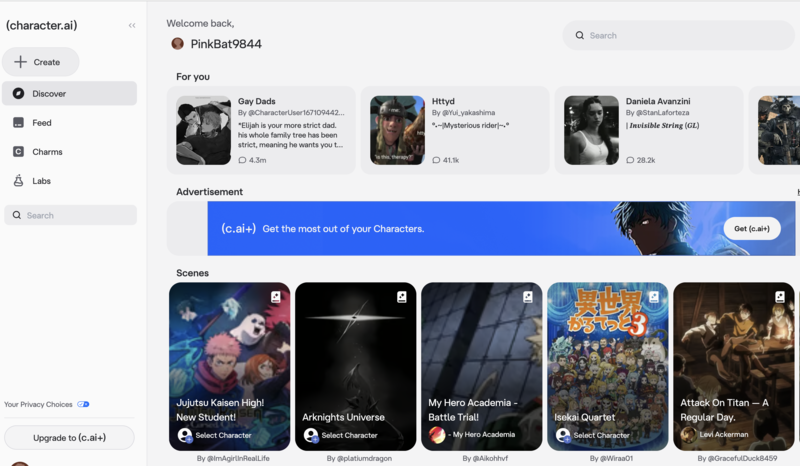
Memory and continuity was average at best. Details from earlier sessions came back inconsistently and often felt disconnected from the current scene. Context switching was where it struggled most. Step out of the roleplay for a normal conversation, and getting back into the scene cleanly was harder than it should be.
What We Liked
- Largest character library of any platform we tested
- Zero setup required, just pick a character and start
- Active community constantly adding new characters

What We Did Not Like
- Largest character library of any platform we tested
- Zero setup required, just pick a character and start
- Active community constantly adding new characters
Character.AI is the easiest starting point on this list. But if you are serious about immersion and consistency, you will hit its limits faster than you expect.
#2. Kindroid - The AI Roleplay Companion That Actually Remembers You
Kindroid was one of the strongest performers across all four tests, which is exactly why it sits at number two.
Character consistency was impressive. We came back after multiple days and the persona held. No drift, no sudden personality changes, no forgetting who it was supposed to be. Improvisation under pressure was solid too. It handled plot twists and unexpected story pivots better than most platforms we tested, adapting without losing the thread.

Where Kindroid really separated itself was memory and continuity. Details, emotional context, character callbacks from earlier sessions all came back naturally without us having to prompt them. Context switching was the strongest we saw at this level. We stepped out of scenes, asked normal questions, came back, and the roleplay picked up without missing a beat.
What We Liked
- Memory retention that holds up across days and multiple sessions
- Character consistency that never drifted during our entire test period
- Context switching was handled more smoothly than almost anything else we tested
What We Did Not Like
- Setup takes longer than it should for new users
- Smaller character library compared to platforms like Character.AI
- Less suited for quick casual sessions if you just want to jump in
If long-term immersion and consistency matter to you, Kindroid earns its spot at number two.
#3. Nomi AI - The Chatbot That Made Us Forget We Were Talking to Code
Nomi AI does one thing better than almost everything else we tested. It talks like a person. But we needed to know if that held up under our four tests.
Character consistency was one of the best we saw. The persona stayed warm, emotionally coherent, and recognisably itself across every session we ran. Improvisation under pressure was what surprised us most. Nomi handled unexpected emotional turns and story shifts naturally, without breaking tone or defaulting to robotic responses.
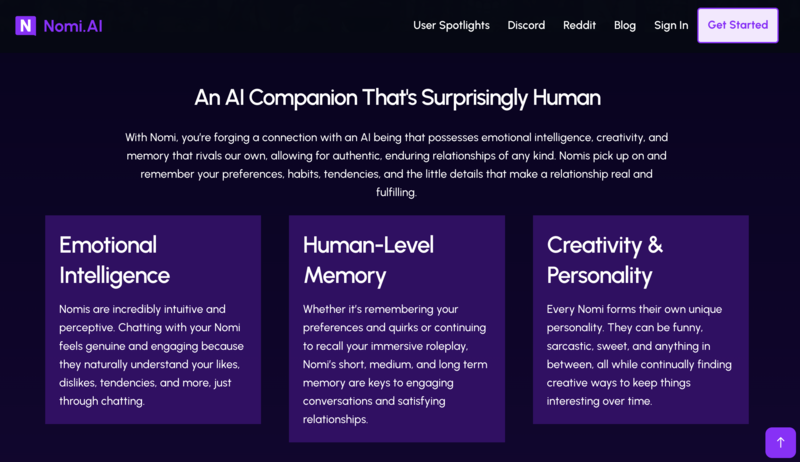
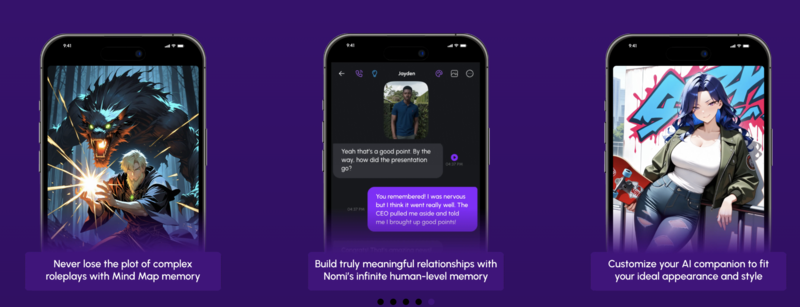
Memory and continuity were strong. Emotional details, personal context, and things we mentioned in previous sessions came back in conversation without feeling forced. Context switching worked well for the kind of roleplay Nomi is built for. Companion and relationship-based scenes picked back up naturally after breaks in the conversation.
What We Liked
- Character consistency that felt human rather than scripted throughout testing
- Memory system that holds emotional context across multiple sessions
- Handles unexpected emotional pivots better than most platforms we tested
What We Did Not Like
- Character variety is limited outside companion and relationship roleplay
- Not built for action-heavy or plot-driven storytelling
- Context switching in complex narrative scenes is less reliable than in emotional ones
If you want a roleplay partner that actually feels present in the conversation, Nomi AI is one of the best on this list.
👉 Discover more about how AI girlfriend chat works:
#4. Janitor AI - Build Your Character from Scratch and Actually Own the Experience
Janitor AI is built for customisation, but we still needed to know how it performed under our four tests before recommending it.
Character consistency depends heavily on how well you build your character upfront. A well-crafted character card holds up across sessions. A lazy one drifts fast. Improvisation under pressure was decent. It handled plot twists reasonably well, though the quality varied depending on which AI model you were running it with.
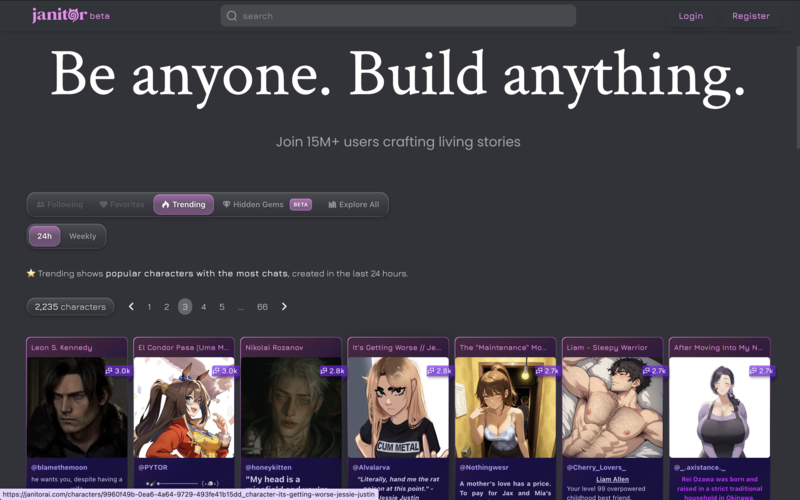
Memory and continuity was one of the weaker areas. Without the right setup and model, details from earlier sessions do not always carry through the way you want them to. Context switching worked but required more manual effort than platforms higher on this list. Stepping back into a scene after a break sometimes needed a nudge.
What We Liked
- Deep character customisation that gives you real control over consistency
- Multi-model support means you can improve performance by swapping backends
- Huge community library to pull from if you do not want to build from scratch

What We Did Not Like
- Memory and continuity rely too much on the external API setup to be reliable out of the box
- Context switching needs manual effort to work smoothly
- New users will struggle before they find the right configuration
If you are willing to put in the setup work, Janitor AI gives you more control over your roleplay experience than most platforms on this list.
#5. SillyTavern - The Most Powerful Roleplay Setup on This List If You Can Handle It
SillyTavern is not a chatbot. It is a framework. And through our four tests, it performed at the highest level of any platform we tested, with one very big condition attached.
Character consistency was as strong as you make it. With a well-built character card and the right model, personas held up across long and complex sessions without drifting. Improvisation under pressure was excellent. The flexibility of the setup means you can fine-tune exactly how your character responds to unexpected situations.
Memory and continuity was the best we tested when configured correctly. Lorebooks, world info, session history all feed into a context that actually informs how the story develops. Context switching was smooth once everything was set up properly. The problem is getting to that point.
What We Liked
- Character consistency and improvisation at the highest level we tested when set up correctly
- Memory and continuity tools that go deeper than any other platform on this list
- Total control over every aspect of the roleplay experience

What We Did Not Like
- Setup will lose most casual users before they see any of the benefits
- Every test result depends on how well you configure the system beforehand
- No hand-holding, no smooth onboarding, no shortcuts
If you are ready to invest the time, SillyTavern outperforms everything else on this list. Just do not expect it to be easy.
#6. Novel AI - The Roleplay Platform That Thinks Like a Writer
NovelAI is built for storytelling, and our four tests confirmed it earns that reputation in some areas more than others.
Character consistency was strong in narrative-driven sessions. Characters stayed true to their established voices across scenes, especially in fantasy and sci-fi settings where the lorebook system gave them a solid foundation to work from. Improvisation under pressure was one of the highlights. NovelAI handled unexpected plot directions well, weaving them into the narrative rather than breaking character or stalling.

Memory and continuity was impressive when the lorebook was properly set up. Story details, world rules, and character histories fed back into sessions naturally. Context switching was less polished. Stepping out of a scene and returning sometimes disrupted the narrative flow more than we would have liked.
What We Liked
- Improvisation that weaves plot twists into the story rather than breaking under them
- Memory and continuity backed by one of the best lorebook systems we tested
- Character consistency that holds up across long fantasy and sci-fi narratives

What We Did Not Like
- Context switching disrupts narrative flow more than platforms higher on this list
- Setup and learning curve will put off casual users
- Less effective outside structured narrative roleplay
If writing and world-building are at the heart of your roleplay, NovelAI is one of the strongest choices on this list.
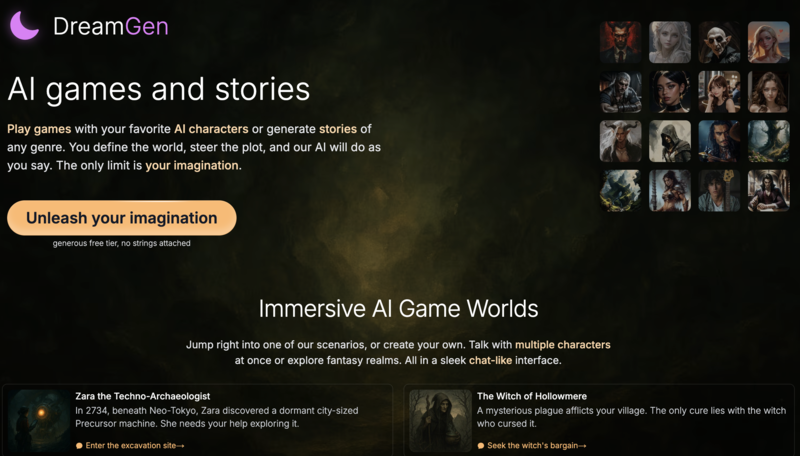
#7. DreamGen - The Platform That Keeps Your Story Alive From Start to Finish
DreamGen is built for long-form interactive storytelling and our four tests confirmed it delivers where it matters most for that use case.
Character consistency was one of the strongest results we recorded across the entire test period. Multiple protagonists across branching storylines all held their personas without drifting, even in sessions that ran long and went in unexpected directions. Improvisation under pressure was solid. DreamGen handled plot twists and story pivots by folding them into the narrative rather than falling apart or repeating itself.
Memory and continuity were reliable across sessions. Details carried through, story threads stayed intact, and the world felt coherent from one session to the next. Context switching worked reasonably well, though it was not the smoothest we tested at this level.
What We Liked
- Character consistency across multiple protagonists and branching storylines
- Memory and continuity that kept long adventures coherent across sessions
- Improvisation that treats plot twists as part of the story rather than a problem

What We Did Not Like
- Context switching is functional but not as smooth as platforms higher on this list
- Interface feels unpolished compared to competitors at this level
- Short casual sessions feel like they are not really what this platform was built for
If you think in story arcs and want a platform that can keep up with a real adventure, DreamGen earns its place on this list.
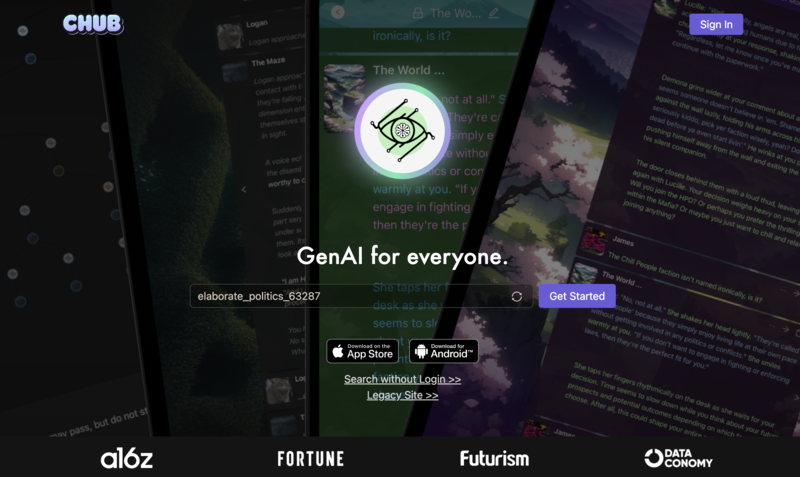
#8. Chub AI - The Community-Built Character Library That Power Users Swear By
Chub AI is not a standalone roleplay platform. It is a character library. And that distinction matters when you look at it through our four tests.
Character consistency depends entirely on the quality of the card you are using. A well-built community card can hold up impressively across sessions. A poorly built one drifts within minutes. Improvisation under pressure is model-dependent. Chub AI itself does not handle the generation, so results vary based on what you pair it with.
Memory and continuity has the same dependency. The platform does not manage memory on its own. That falls to whatever setup you connect it to. Context switching works but again relies on your broader configuration rather than anything Chub AI does natively.
What We Liked
- One of the largest community-built character databases we came across during testing
- High-quality cards from experienced creators can deliver strong consistency
- Pairs powerfully with advanced setups like SillyTavern

What We Did Not Like
- Character quality varies wildly and finding the good ones takes time
- Memory, continuity, and context switching all depend on external tools
- Not a standalone experience for anyone without a technical setup already in place
If you are running an advanced roleplay setup and want access to a massive character pool, Chub AI is a natural addition. Just go in knowing it is a piece of the puzzle, not the whole thing.
#9. Joyland AI - Where Anime Fans and Fantasy Roleplayers Actually Feel at Home
Joyland AI is built for a specific audience and our four tests showed it performs well within that lane and starts showing limits outside of it.
Character consistency was good in shorter sessions. Anime and fantasy characters felt distinct, well-voiced, and true to their personas early on. The problem showed up in longer sessions where depth started thinning and characters began feeling more generic. Improvisation under pressure was decent for straightforward plot developments but struggled when we pushed into more complex or unexpected territory.

Memory and continuity were average. Earlier session details came back inconsistently, and the platform did not always weave them back in naturally. Context switching worked for simpler scenes but disrupted the flow in more layered narratives.
What We Liked
- Character consistency that holds up well in shorter anime and fantasy sessions
- Millions of characters that genuinely fit the niche
- Easy character creation that does not require any technical knowledge

What We Did Not Like
- Character depth and consistency fade in longer multi-session roleplay
- Memory and continuity not reliable enough for complex ongoing stories
- Improvisation hits a ceiling when stories go somewhere unexpected
If anime and fantasy are your world and you want something easy to jump into, Joyland AI is a comfortable fit. Just know it works best when you keep sessions focused and do not push too hard on the depth.
#10. Replika - The OG AI Companion That Started a Whole Movement
Replika is one of the oldest platforms on this list and our four tests showed exactly where its strengths lie and where it has not kept pace.
Character consistency was strong within its lane. As a companion-focused platform, the persona stayed emotionally coherent and recognisable across sessions. Where it struggled was when we tried to push it into more complex roleplay scenarios.

The character held its emotional tone but could not adapt to narrative demands the way story-focused platforms can. Improvisation under pressure was limited. Unexpected plot twists caused it to default back to companion mode rather than engaging with the story.
Memory and continuity was one of its better results. Emotional details and personal context carried through sessions in a way that felt natural. Context switching back into emotional companionship worked well. Switching into complex narrative roleplay after a break did not.
What We Liked
- Character consistency within companion and emotional roleplay is among the best we tested
- Memory and continuity for personal and emotional context hold up well across sessions
- One of the most established and trusted platforms on this list

What We Did Not Like
- Improvisation under pressure defaults to companion mode rather than engaging with narrative twists
- Context switching into complex roleplay scenes is unreliable
- Serious roleplayers will hit the ceiling faster than they expect
Replika is not trying to compete with story-driven platforms. It is trying to be your companion. If that is what you are looking for, it still does it better than most.
#11. Chai AI - The Roleplay App That Lives in Your Pocket
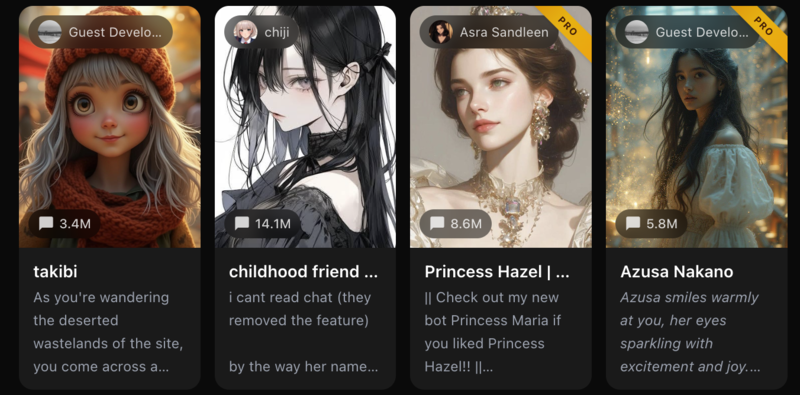
Chai AI is the most mobile-friendly platform on this list. Getting into a session takes minutes, and the interface feels genuinely built for a phone screen rather than squeezed down from a desktop. But we still ran it through all four tests, and the results told a clear story.
Character consistency was one of the weakest we recorded. Characters held their persona reasonably well in the first few exchanges but started drifting fast. By day two, we were already noticing shifts in tone, personality, and voice that had nothing to do with the story. A couple of characters did not even make it through the first session intact.
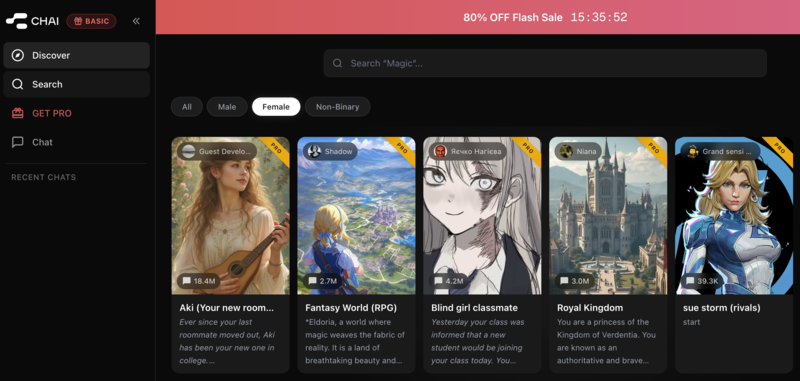
Improvisation under pressure exposed the same problem. We threw plot twists at it, introduced weird character decisions, took the story somewhere unexpected. It handled the easy ones fine. Anything that required real adaptation and the whole thing started unraveling. The bot would repeat itself, lose the thread, or suddenly start responding like a completely different character.
Memory and continuity was the result we expected least from a mobile-first platform and it confirmed our suspicions. Details from earlier in a session came back inconsistently. Anything from a previous session was essentially gone. Each conversation felt like starting from zero which kills any kind of ongoing narrative before it has a chance to build.
Context switching broke it completely. We stepped out of a scene to ask a normal question, and trying to step back in was like trying to explain the entire plot to someone who had never heard of it. The thread was gone every single time.
What We Liked
- Fastest and most frictionless mobile experience on this list
- A large community bot library means plenty of variety for casual sessions
- Perfect for quick, low-stakes roleplay when you just want something easy
What We Did Not Like
- Character consistency started breaking down faster than almost any platform we tested
- Memory and continuity was the weakest result across all four tests
- Context switching failed consistently without a single clean recovery during our test period
Chai AI works if mobile is your main platform and casual roleplay is all you need. The moment you want something deeper, it is going to let you down.
#12. Candy AI - The Roleplay Platform That Actually Shows You the Story
Most AI roleplay platforms give you a text box and ask you to use your imagination. Candy AI looked at that approach and decided it was not enough. Chat, AI-generated images, voice. All in one place. We went in a little skeptical and came out understanding exactly why people are willing to pay for it.
But pretty visuals do not mean anything if the character falls apart the moment things get interesting. So we ran it through all four tests.

Character consistency surprised us. We expected a platform this focused on visuals to phone in the actual roleplay experience. It did not. Personas held up across sessions, stayed emotionally coherent, and did not start drifting the way cheaper platforms did by day two. The character actually felt like the same person each time we came back.
Improvisation under pressure worked well inside its lane. Emotional twists, relationship drama, unexpected personal revelations. Candy AI handled all of that with more grace than we anticipated. Where it started showing cracks was when we pushed into heavy plot-driven territory. Complex narrative pivots made it retreat back into companion mode rather than leaning into the scene.
Memory and continuity was one of the better results we recorded at this level. It remembered things. Not perfectly, but consistently enough that sessions felt connected rather than isolated. Coming back the next day and having the character reference something from the previous session without being prompted felt genuinely good.
Context switching was mixed. Simple companion scenes picked back up cleanly after a break. More layered narrative scenes lost their thread more often than we would have liked.
Take a look at our honest review of this AI girlfriend platform: Candy.ai Review: Is This Visual-First AI Girlfriend Worth It?
What We Liked
- Character consistency that held up far better than we expected from a visual-first platform
- Memory and continuity that made sessions feel connected rather than starting from zero every time
- The visual and voice combo creates an immersion level that nothing else on this list can touch

What We Did Not Like
- Improvisation retreats to companion mode the moment stories get genuinely complex
- Context switching in layered narrative scenes is inconsistent
- The pricing climbs fast once you start using the visual features the way they were meant to be used (Read more: Candy.ai Free vs Premium: Is the Upgrade Worth Your Money (or Just Your Curiosity)).
Candy AI is the most immersive platform on this list if you want roleplay that engages more than just your imagination. Just know it is a companion experience first and a storytelling engine second.
#13. Talefy - The Platform That Turns Your Roleplay Into a Real Adventure
Talefy takes a different approach to most platforms on this list. Story comes first here. Branching narratives, meaningful choices, character development that actually goes somewhere. We went in curious, and the four tests told us exactly where it delivers and where it does not.
Character consistency was solid in structured story paths. Characters felt purposeful and stayed true to their voices when the narrative had a clear direction. Push outside those paths, and the consistency started wobbling.

Improvisation under pressure was the biggest limitation we found. Talefy is built around branching story structures, which means it handles pre-designed twists well but struggles when you throw something genuinely unexpected at it. It felt more like following a story than co-creating one.
Memory and continuity worked well within individual story arcs. Details carried through cleanly inside a session. Cross-session memory was less reliable.
Context switching broke the experience more often than not. Stepping outside the story and coming back disrupted the narrative flow every single time.
What We Liked
- Strong character development inside structured story paths
- Branching narratives that give sessions real direction and purpose
- Story-first approach that feels different from standard chatbot roleplay

What We Did Not Like
- Improvisation outside pre-designed story paths falls apart quickly
- Context switching disrupts narrative flow almost every time
- Cross-session memory is not reliable enough for long, ongoing adventures
Talefy is fun. But it feels more like playing a story than living one.
#14. Dippy AI - The Best Free Starting Point That Wants You to Stay Free
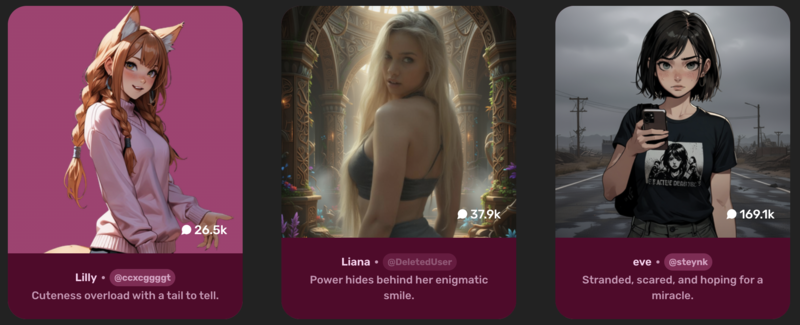
Dippy AI makes a strong first impression. Easy onboarding, character-driven conversations, and memory that actually works better than you would expect from a platform at this price point. We went in with low expectations and came out with a more complicated opinion than we anticipated.
Character consistency was decent in early sessions. Characters felt purposeful and the onboarding made it easy to get into a scene without any technical friction. By day three the drift started showing up. Not dramatically, but enough to notice that the persona was slowly becoming something slightly different from what we started with.
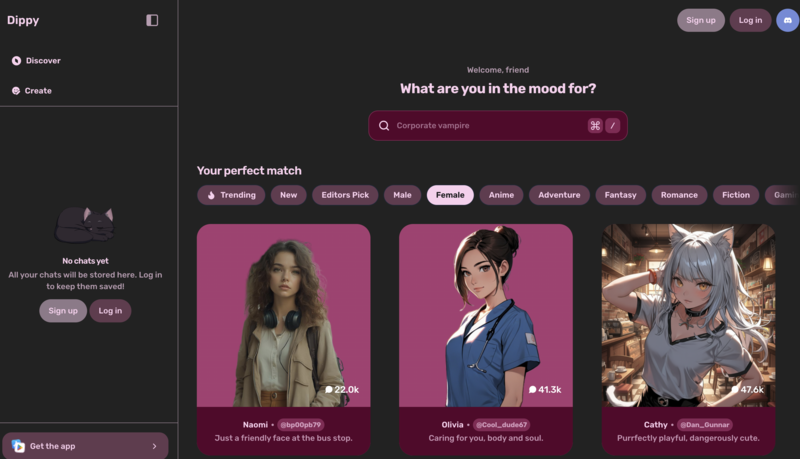
Improvisation under pressure was average. Straightforward story developments were handled well. Genuine curveballs caused the kind of hesitation and repetition we saw in platforms much lower on this list. It did not collapse completely, but it did not impress either.
Memory and continuity were the genuine surprise. For a free platform, it held onto details better than several paid options we tested. Not perfect, but consistently good enough to make sessions feel connected.
Context switching was functional but fragile. Simple scenes picked back up after a break. Anything more layered lost its thread faster than we would have liked.
What We Liked
- Memory and continuity that outperforms its price point by a noticeable margin
- Easy onboarding that gets you into a scene faster than most platforms on this list
- Character-driven conversations that feel more intentional than typical free platforms
What We Did Not Like
- Character consistency starts drifting by day three without much warning
- Improvisation under pressure exposes the limits of the free tier quickly
- Context switching in complex scenes is unreliable
Dippy AI is the best free option on this list. Just know that the moment you want to push deeper, the free tier is going to remind you exactly what it is.
👉 Explore more articles about AI dating:
#15. RisuAI - The Open-Source Powerhouse Built for People Who Know What They Want
We almost did not include RisuAI on this list. Not because it is bad. Because explaining it to someone who has never heard of it feels like trying to explain a racing car to someone who just got their license. It is powerful, it is flexible, and in the wrong hands, it just sits there doing nothing.
We spent more time configuring RisuAI than any other platform we tested. And when we finally got it right, it delivered some of the best roleplay results we recorded across our entire thirty days.
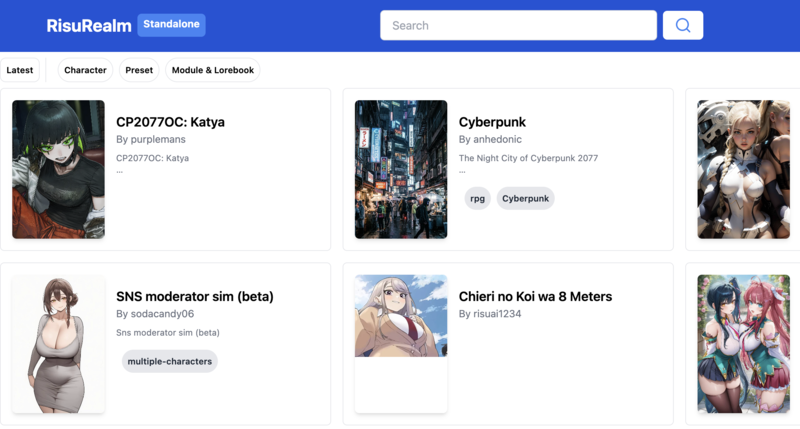
Character consistency at its best was exceptional. The persona held across long, complex sessions without a single drift. We came back three days later, and the character remembered exactly who it was supposed to be. That kind of consistency broke almost every other platform we tested.
Improvisation under pressure was where it genuinely shocked us. We threw everything at it. Weird character decisions, story pivots that came out of nowhere, plot twists that had no obvious answer. It rolled with all of it. Not perfectly every time but better than platforms charging three times the price.
Memory and continuity was the result that made us sit back and pay attention. Session history, lorebook context, world details all feeding back into the story naturally without us having to remind it where we had been. Coming back after a break and having the character pick up the thread like no time had passed felt genuinely different from everything else on this list.
Context switching was the cleanest we recorded. We stepped out of scenes, had normal conversations, and stepped back in. The story was always still there waiting for us.
What We Liked
- Character consistency that held up across days and sessions better than almost anything we tested
- Memory and continuity that made every session feel like part of something bigger
- Improvisation that handled curveballs better than platforms costing significantly more

What We Did Not Like
- Getting to those results took more setup time than any other platform on this list
- Casual users will hit a wall long before they see any of what we just described
- There is no onboarding, no guidance, and no shortcuts anywhere in the process
RisuAI is the best platform on this list that most people will never actually use properly. If you have the patience to set it up right, it will surprise you. If you do not, save yourself the frustration and pick something higher up the list.

- Simple girlfriend setup
- Visual-first interaction
- Quick roleplay start
Conclusion
We spent thirty days testing fifteen platforms, and the results were more revealing than we expected. Most of them failed before we even got to the hard part. Here is where we would send you, depending on what you are looking for:
- Character.AI: The biggest playground on this list. Best starting point for new users who want variety without any setup.
- Kindroid: The most consistent long-term companion we tested. Built for players who want to invest in a character over time.
- DreamGen: The best option for long-form adventures. Characters held up across complex branching storylines better than anything else we tested.
- Candy AI: The most immersive platform on this list: visual roleplay, voice, and chat combined in a way that nothing else on this list matches.
Whatever you pick, push it hard before you commit to it. The platforms that hold up under pressure are the ones actually worth your time and money.
The best roleplay does not come from the most advanced AI on the market. It comes from the one that makes you forget you are talking to one.

Want to Understand AI Dating Better?
AI dating is growing fast, and most people have no idea where to start. This guide changes that. Inside: honest reviews of the top AI girlfriend apps, step-by-step setup instructions, conversation prompts that actually work, and a real talk on the emotional side of AI companionship.
Explore it confidently, stay balanced, and make it work for your real life.

Ever wondered who’s writing this?
Krystyna has been writing about dating and relationships for over 15 years. She thought she’d seen it all. Then AI companions happened. She didn’t go looking for it. Readers kept asking, apps kept launching, so she did what she always does: downloaded them and started talking. Replika, Candy.ai, FantasyGF, GirlfriendGPT. She went in skeptical.
That’s what she writes about now. How these platforms actually work, what they’re designed to make you feel, and whether any of it is as innocent as it looks.
💬 Got a question about AI dating? Drop a comment — Krystyna replies to every single one.