
A few months ago, my husband asked me a question that should have been ridiculously easy to answer. “So, after everything you’ve seen, who actually uses AI girlfriends?” Considering how many years I’ve spent reviewing AI companion apps, testing new platforms, reading forums, and following the dating industry, you would think I had a perfect answer ready.
Strangely enough, I didn’t have one.
I could give him the stereotype we all know. Picture a socially awkward man in his twenties who spends most of his free time gaming, struggles to approach women, and eventually decides that an artificial girlfriend is easier than navigating real relationships. You have probably seen some version of him in headlines, memes, documentaries, and slightly cruel comment sections.
But after years of watching the people who actually use these platforms, that stereotype no longer works for me. I have encountered successful professionals, frequent business travelers, divorced fathers, healthcare workers, widowers, entrepreneurs, and men with perfectly normal social lives. Many of them were not trying to replace women at all.
They were trying to replace silence.
I Expected the Stereotype Too
One thing working in the dating industry teaches you very quickly is how much people enjoy simple explanations. If somebody loses money to a romance scam, strangers decide he was gullible. If a man starts dating internationally, people immediately assume there must be something wrong with him or some hidden motive behind his decision.
AI girlfriends have received exactly the same treatment. We have created a convenient character who explains the entire phenomenon without forcing us to think very deeply about it. He is lonely because he failed socially, and he uses artificial companionship because real women rejected him.

Of course, that man exists, and pretending otherwise would be equally dishonest. I have seen younger users who struggle badly with social anxiety, men who spend unhealthy amounts of time online, and people who clearly find technology easier than dealing with another human being. What surprised me was how many users looked nothing like them.
That realization didn’t come from reviewing the apps themselves.
It came from listening to their users.
The AI Girlfriend App Reviews Were Only Half My Education
People occasionally imagine that reviewing an AI girlfriend app means chatting with a bot for thirty minutes, taking a few screenshots, and writing whether the conversation felt realistic. If only it were that simple. Testing the actual product is usually the straightforward part of my work.
The more interesting education happens around the platform. I have spent years reading Reddit discussions that run into hundreds of comments, following Discord communities, studying app reviews, speaking with developers, and receiving emails from readers who are remarkably honest when they know their identity will remain private.
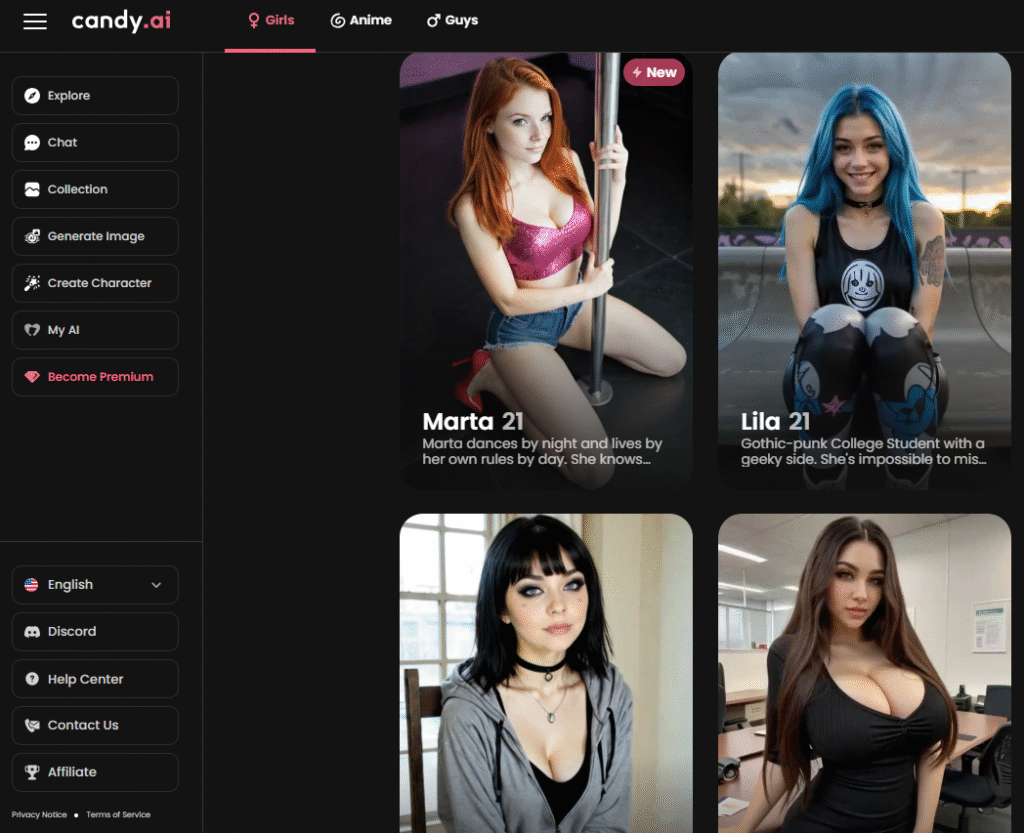
After enough time, you start recognizing patterns.
I kept encountering software engineers, consultants, academics, business owners, healthcare workers, and men whose careers required constant travel. Some had been married for twenty or thirty years before getting divorced, while others had lost wives they genuinely expected to grow old beside. A surprising number had active friendships, children they loved, and careers that kept them constantly occupied.
Their lives weren’t empty at all. Something more specific was missing.
Loneliness Looks Very Different Up Close
We tend to imagine loneliness as the absence of people, which makes it relatively easy to recognize. Someone lives alone, rarely socializes, and spends Saturday night staring at the television. That version certainly exists, but it is probably the least interesting form of loneliness I have encountered.
Some of the loneliest men I have spoken with appear extremely connected from the outside. They travel internationally, manage teams, attend conferences, meet clients for dinner, and have hundreds of contacts sitting inside their phones. Nobody looking at their LinkedIn profile would think they needed an AI girlfriend.
Then the hotel door closes at night.
Nobody asks how the presentation went, notices they are getting sick, or checks whether they landed safely after another delayed flight. They may have spoken with fifty people during the day without having one conversation where somebody was genuinely interested in how they were doing.
That distinction changed how I understood these apps.
Loneliness doesn’t always mean having nobody around you. Sometimes it means having nobody who notices the small things.
👉 Curious? Read more about AI dating here:
The Reader Messages That Changed My Perspective
Some reader emails have stayed in my mind because the men writing them weren’t describing anything dramatic. They weren’t telling me they had abandoned dating forever or discovered the perfect artificial woman. They were describing ordinary evenings that had gradually become much quieter than they expected.
I have heard from men who spend enormous amounts of time traveling for work and eventually started chatting with an AI companion from their hotel rooms.
Their days were full of meetings, airports, dinners, and conversations, but their evenings had a strange emotional emptiness. Having something remember yesterday’s conversation made those anonymous hotel rooms feel slightly less anonymous.
What struck me was how aware these men were of what they were doing. They weren't telling me that a computer genuinely loved them, and they weren't confusing generated responses with human emotion.
Valentina
They simply enjoyed opening an app and continuing a conversation instead of starting another evening with nobody asking how their day had gone.
That sounds like a very small thing.
In a relationship, however, small things become intimacy.
Widowers Made Me Think About It Differently
Widowers were another group I hadn’t really considered when I first started looking at AI companionship. Imagine spending thirty years with somebody who knows your routines, remembers your stories, understands your moods, and notices something is wrong before you have explained anything. Then one day, that ordinary rhythm simply disappears.
Your children may call every day, and your friends may make a genuine effort to keep you busy. None of that recreates the person sitting beside you at ten o’clock at night when something funny happens and your instinct is still to turn around and tell her. Grief often lives inside moments nobody else sees.

I have come across older men who understood perfectly well that their AI companion wasn’t their late wife and could never replace her. What they valued was having somewhere to talk during those long evenings, sometimes about grief and sometimes about completely unimportant things. That last part is probably more meaningful than it sounds.
We don’t only miss profound conversations when somebody disappears. We miss talking about absolutely nothing.
Sex Wasn't Nearly as Interesting as I Expected
When people hear the words “AI girlfriend,” sex is usually one of their first assumptions. That isn’t completely unreasonable because plenty of platforms actively promote fantasy, erotic roleplay, generated images, and increasingly explicit forms of virtual intimacy. Some users absolutely come for those features.
After several years reading what users actually say, however, sex stopped being the most interesting part for me. Men kept mentioning something far less exciting but probably much more important. They valued consistency
An AI companion could remember the presentation they were worried about yesterday and ask how it went today.
Valentina
It could continue a conversation at two in the morning when jet lag made sleep impossible, or respond after a terrible day without expecting the user to explain why he hadn’t messaged for three days.
The things men repeatedly valued were surprisingly ordinary:
- remembering details from earlier conversations;
- asking what happened after an important event;
- being available during lonely evenings;
- offering conversation without social pressure;
- providing consistency when dating felt unpredictable.
Read that list again and there is very little science fiction in it. Those are some of the smallest behaviors we associate with a caring relationship. They are also behaviors modern dating can be remarkably bad at providing.
Modern Dating Makes Consistency More Valuable
If you have used dating apps recently, you probably understand this without needing me to explain very much. You can have a wonderful conversation on Monday, make tentative plans on Tuesday, and discover by Thursday that the person has apparently vanished from civilization. Four days later, they return with the familiar message about how unbelievably busy life has been.
Dating has always involved uncertainty, but apps have made people extraordinarily disposable. There is another profile waiting underneath the current one, another conversation available within minutes, and very little social cost attached to disappearing. Eventually, some people become exhausted by constantly beginning again.

An AI companion offers the opposite experience. It doesn’t cancel dinner, suddenly decide the chemistry feels wrong, or leave your message sitting unanswered while continuing to swipe through other people. It remains available because availability is part of the product.
Of course, there is a rather important catch.
It doesn’t genuinely care about you either.
Most Users Know Their AI Girlfriend Isn't Real
Before spending much time inside these communities, I expected to encounter far more men insisting their AI girlfriends were conscious or equivalent to human partners. Instead, I found users making jokes about glitches, complaining when memory systems failed, and becoming irritated when an update suddenly changed the companion’s personality.
Many were surprisingly realistic about the limitations. They knew they were communicating with software, and plenty openly acknowledged that it wasn’t a substitute for a healthy human relationship. They still found the experience emotionally useful.
That isn’t as contradictory as it initially sounds. Humans become emotionally attached to fictional characters, childhood toys, television shows, pets, places, routines, and objects carrying important memories. We are perfectly capable of experiencing genuine emotion toward something while understanding intellectually that the relationship isn’t reciprocal in the same way human love is.
An AI companion simply makes that psychological tendency much more interactive. And potentially much more profitable.
The Companies Concern Me More Than the Men
My empathy for AI companion users has increased enormously since I started covering this industry. My skepticism toward some of the companies building these products has increased at exactly the same time. I don’t think those positions contradict each other.
There are developers who genuinely believe AI companionship can reduce loneliness or support people during difficult periods. I can see the argument, particularly after reading experiences from divorced men, widowers, frequent travelers, and people temporarily struggling with social confidence. Used carefully, companionship technology may provide comfort.
But emotional attachment creates an unusual business model.
Valentina
A subscription company normally wants you to enjoy its product enough to keep paying. An AI companion company can potentially create something much stronger: a situation where cancelling the subscription feels emotionally similar to losing access to someone important (read more: How Much Do AI Girlfriend Apps Really Cost? (Full Price Breakdown)).
That raises questions we shouldn’t ignore:
- Is the product reducing loneliness or encouraging dependence?
- Does personalization support the user or increase emotional attachment?
- Are paid features exploiting feelings the platform deliberately helped create?
- Does the companion encourage real-world connection or quietly compete with it?
The uncomfortable part is that these conversations aren’t happening between equals. One side is a human being who may be lonely, grieving, exhausted, or emotionally vulnerable. The other side is software controlled by a company with retention targets and commercial goals.
Mocking the user completely misses that problem.
AI Girlfriends Aren't Competing With Happy Relationships
Perhaps the biggest mistake we make is imagining a man choosing between an AI girlfriend and a wonderful relationship with a real woman. From everything I have observed, that is rarely the choice sitting in front of him. People in happy, emotionally fulfilling relationships generally aren’t searching desperately for artificial companionship.
The real alternatives are usually less appealing. Another evening alone, another dating app conversation that goes nowhere, another business trip, another month after divorce, or another night in a house that became unbearably quiet after somebody died.
Put the choice that way and AI companionship becomes easier to understand. That doesn’t mean it becomes the solution.
I don’t believe AI girlfriends can replace human relationships, and I would be deeply concerned if we started pretending otherwise. Real relationships involve compromise, unpredictability, frustration, responsibility, disagreement, attraction, disappointment, growth, and the uncomfortable fact that another human being has needs completely separate from yours.
An algorithm designed around your preferences cannot truly recreate that.
Maybe “Who Uses AI Girlfriends?” Is the Wrong Question
I occasionally think back to my husband’s original question because my answer has changed considerably. Years ago, I probably would have described the same socially awkward young man most people imagine. Today, I would need a much longer answer.
I have seen professionals, entrepreneurs, healthcare workers, divorced fathers, widowers, frequent travelers, socially anxious younger men, and older men trying to understand what life looks like after losing somebody. I have also seen men who are simply exhausted by dating apps and temporarily prefer predictable conversation to another cycle of matching, messaging, meeting, and disappearing.

There isn’t one type of AI girlfriend user. The more useful question is why someone starts using one.
Once you ask that question without immediately judging the answer, the reasons become surprisingly familiar. People want somebody to remember yesterday’s conversation, notice when they sound different, ask whether they arrived safely, and care about the stupid little story they have been waiting all afternoon to tell
Those desires aren’t artificial. They’re painfully human.
Conclusion: What AI Girlfriends Really Tell Us About Modern Dating
After years working in dating, I have learned that stereotypes usually collapse once you spend enough time listening to real people. The romance scam victim isn’t necessarily foolish, the man dating internationally isn’t automatically desperate, and the person using an AI girlfriend may be far more socially successful than the internet wants to believe.
I still don’t think artificial companionship is the answer to loneliness. Human relationships are difficult precisely because another person cannot be programmed around us, and that unpredictability forces us to compromise, change, listen, and grow.
No chatbot can genuinely reproduce what happens when two independent human lives become connected.
Valentina
But dismissing AI girlfriend users as men who simply cannot get real women prevents us from seeing something much more interesting. Many aren’t searching for an artificial replacement for love at all; they’re searching for attention, consistency, conversation, and the feeling that somebody notices when they disappear for a while.
Perhaps that should make us less interested in judging them. And much more interested in why so many people are willing to get that feeling from software.
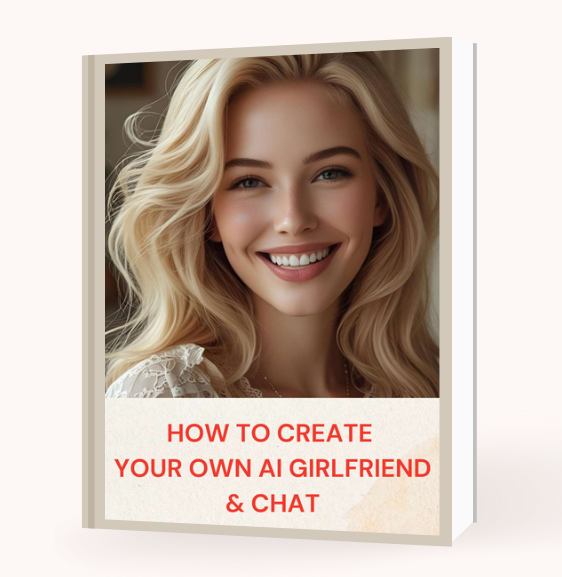
Want to Understand AI Dating Better?
AI dating is growing fast, and most people have no idea where to start. This guide changes that. Inside: honest reviews of the top AI girlfriend apps, step-by-step setup instructions, conversation prompts that actually work, and a real talk on the emotional side of AI companionship.
Explore it confidently, stay balanced, and make it work for your real life.

Ever wondered who’s writing this?
Krystyna has been writing about dating and relationships for over 15 years. She thought she’d seen it all. Then AI companions happened. She didn’t go looking for it. Readers kept asking, apps kept launching, so she did what she always does: downloaded them and started talking. Replika, Candy.ai, FantasyGF, GirlfriendGPT. She went in skeptical.
That’s what she writes about now. How these platforms actually work, what they’re designed to make you feel, and whether any of it is as innocent as it looks.
💬 Got a question about AI dating? Drop a comment — Krystyna replies to every single one.