
Picture three messages landing on your phone within the same hour.
I found myself thinking about you today.
So, tell me… what happened?
You know you can always talk to me.
One is from a man you’ve never met who says he’s an engineer on an oil rig somewhere far away. The other is from an AI girlfriend app with a name, a face, and a surprisingly good memory for your problems.
Here’s what fascinates me. Your brain might respond to both in almost the same way.
After years of writing about international dating, romance scams, and now AI companionship, I keep noticing the same thing. They’re not the same. One is a crime. The other is a product with some serious ethical questions.
But both tap into something very human: our need to feel noticed. Understanding that matters, whether you’re dating online or getting attached to someone you know is software.
How Romance Scammers Build Trust Before Asking for Money
Most people imagine a romance scam starts with money. A medical emergency. A frozen bank account. Or the classic oil rig problem, a place that seems to have ruined an incredible number of online relationships.
But that’s usually the end of the story. The real work happens weeks, sometimes months, earlier.
A romance scammer messages you every morning. They remember your sister's name, your work deadline, even that your knee has been bothering you. When you're having a bad day, they're there.
Valentina
A reader I’ll call Anna, a 47-year-old divorced woman from Germany, told me about a man she met online who claimed to be working abroad. For nearly three months, he never asked for money. He texted before work, asked how her teenage daughter was doing at school, remembered the date of an important meeting, and checked on her when she had the flu.
That’s why she trusted him.
When he eventually told her his account had been temporarily blocked and asked for help, it didn’t feel like sending money to a stranger. It felt like helping someone she’d spoken to every day for months.
That’s how the scam works. The attachment comes first. The request comes later.
Why an AI Girlfriend Can Feel Surprisingly Real
Now look at what users actually like about AI girlfriend apps, and you’ll notice something familiar. She remembers what you told her last week. She doesn’t get distracted or cut you off halfway through a story. Depending on the app, she can flirt with you, comfort you, message first, and gradually adjust to your personality and what you seem to want from the relationship.
And she’s there at 2:17 a.m. when your real friends are, quite reasonably, asleep.
Is that love? No. But put all those little things together and you get something we’re naturally very responsive to: consistent attention.
I don’t think people become attached to AI girlfriends because they suddenly forget they’re talking to software. That’s far too simplistic. We get emotionally invested in fictional characters, TV shows, influencers, and people we’ve never met all the time. We know what we’re watching isn’t part of our real life, but the feelings can still be real.
What interests me more is why this particular kind of artificial connection has become so attractive to so many people, so quickly.
👉 Read more:
The Crucial Difference: You Know She's AI
This is where I think comparing AI girlfriends directly to romance scammers becomes unfair.
A romance scammer creates a fake identity because they need you to believe there’s a real person behind the messages. You never agreed to a fake relationship because you didn’t know you were in one. With an AI girlfriend, you do.
One of my readers, Daniel, a 39-year-old divorced man from the UK, described this well. He started using an AI girlfriend app after his divorce, mostly out of curiosity. Within a few weeks, he was looking forward to their evening conversations. He knew “Sofia” wasn’t sitting somewhere waiting for his reply. He knew the messages came from software. But he still enjoyed the attention and companionship.
That distinction matters. From my experience writing about dating and AI girlfriends, I’d pay attention to what happens after that initial attachment develops.
- Are you simply enjoying the conversations, or are you spending more money than planned?
- Are you choosing the chatbot over meeting real people?
- Would deleting the app feel strangely difficult?
Those are better warning signs than simply asking whether you’ve developed feelings for AI.
I also think users should check what happens to their conversations and personal data before sharing intimate details.
Enjoying an artificial relationship isn't automatically a problem. Losing perspective on what you're giving it, whether that's money, time, privacy, or emotional energy, can be.
Valentina
A romance scam victim never knowingly chooses the illusion. An AI companion user does. For me, that’s still the ethical line that matters most.
Maybe We're Asking the Wrong Question About AI Relationships
Whenever I write about AI relationships, the same question comes up: Are the feelings actually real? I’ve started to think that’s the wrong question.
An AI girlfriend doesn’t experience love the way a human does. We know that. But the person talking to her can still feel comfort, excitement, attachment, jealousy, or even rejection. Knowing you’re talking to software doesn’t magically switch those emotions off.
I’ve seen something similar in my years writing about romance scams. The scammer’s love was never real. The victim’s one was.
And the heartbreak afterward can be absolutely devastating. Finding out that the person you trusted never existed doesn’t make your feelings disappear. If anything, it can make the experience harder to process.
AI relationships show us something similar, although without the deliberate deception of a romance scam. Our emotions respond to the experience we’re having. If someone or something remembers us, comforts us, flirts with us, and makes us feel wanted, we can become attached. So instead of asking, “Is this relationship real?” I think a better question is: “What is this relationship doing to me?”
Is it making your life better? Is it filling a temporary gap? Or is it slowly replacing relationships and experiences you actually want in the real world?
For me, that’s a much more useful conversation.
What This Really Tells Us About Human Connection
It’s easy to divide people into two groups: those who would “never fall for it” and those who get scammed or become too attached to an AI girlfriend. After years of writing about dating and relationships, I don’t think it’s that simple.
People are more vulnerable at certain moments in their lives. After a divorce. After moving somewhere new. During grief. When friendships slowly disappear or dating starts to feel more exhausting than exciting. Sometimes there’s no dramatic reason at all. You simply haven’t felt truly noticed by another person in a long time.
Then someone, or something, starts paying attention.
- “How was your day?”
- “Did that meeting go okay?”
- “You seemed upset yesterday. Are you feeling better?”
These are tiny questions. But emotionally, they can carry a surprising amount of weight. They tell us something almost everyone wants to hear: you matter enough for me to remember.
And that’s where I see the connection between these very different worlds. Romance scammers exploit that need. AI companions simulate meeting it. A healthy human relationship actually meets it.
Maybe the lesson isn’t that we’re becoming too easy to manipulate or too attached to technology. Maybe it’s simply that being remembered, listened to, and genuinely noticed matters much more than we like to admit.
What You Should Take Away From All This
I don’t think the rise of AI girlfriends means we’ve forgotten how real relationships work. And after years of writing about romance scams, I would never describe someone who fell for one as simply foolish. Good scammers know exactly what they’re doing.
What both worlds show us is something much more interesting: attention has become incredibly valuable.
Romance scammers figured this out years ago. AI companion companies understand it too. Remember someone's problems. Ask questions. Be available. Make them feel heard. Do it consistently, and emotional attachment can follow surprisingly quickly.
Valentina
So whether you’re dating online or experimenting with an AI girlfriend, there are a few things I’d keep in mind:
- Consistent attention can feel like intimacy, but it isn’t proof that someone genuinely loves you.
- If an online partner always has an excuse for avoiding video calls or meeting in person, take that seriously.
- With AI girlfriends, know what you’re sharing. Before getting very personal, check how the app handles your conversations and data.
- Watch your own behavior too. If you’re spending more money, time, or emotional energy than you intended, that’s worth noticing.
- And if you’re feeling particularly lonely or isolated, don’t ignore that part of the story.
For me, that’s the bigger lesson here.
Instead of laughing at people for getting attached to a stranger or a chatbot, maybe we should ask why being listened to and remembered has become valuable enough that people are willing to find it wherever they can.
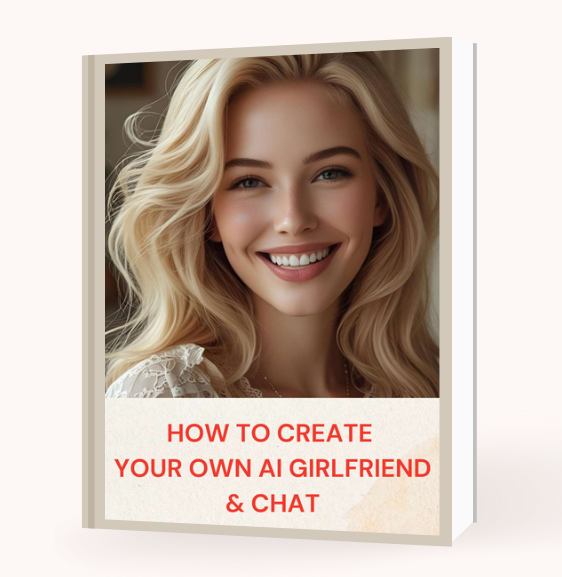
Want to Understand AI Dating Better?
AI dating is growing fast, and most people have no idea where to start. This guide changes that. Inside: honest reviews of the top AI girlfriend apps, step-by-step setup instructions, conversation prompts that actually work, and a real talk on the emotional side of AI companionship.
Explore it confidently, stay balanced, and make it work for your real life.

Ever wondered who’s writing this?
Krystyna has been writing about dating and relationships for over 15 years. She thought she’d seen it all. Then AI companions happened. She didn’t go looking for it. Readers kept asking, apps kept launching, so she did what she always does: downloaded them and started talking. Replika, Candy.ai, FantasyGF, GirlfriendGPT. She went in skeptical.
That’s what she writes about now. How these platforms actually work, what they’re designed to make you feel, and whether any of it is as innocent as it looks.
💬 Got a question about AI dating? Drop a comment — Krystyna replies to every single one.