
A reader told me something recently, then looked embarrassed the moment the words left his mouth.
“I think I’m developing feelings for an AI.”
He laughed for a second, then went quiet.
That reaction makes sense. Nobody plans for this. Nobody downloads an AI companion app thinking, I’d like to become emotionally attached to software. Most people open one out of curiosity. They want to test the technology, kill time, or see what the hype is about.
They expect something clumsy or shallow.
Instead, the chatbot listens.
It replies quickly. It remembers details. It responds in a way that often feels thoughtful. And if you’re honest, some conversations with AI companion apps may feel better than the human conversations you had that same week.
No awkward pauses. No mixed signals. No fear of saying the wrong thing. No replaying the conversation later and wondering how you came across.
Just smooth interaction on demand.
That is usually where emotional attachment to AI begins.
Why It Feels More Real Than People Expect
AI companions do not love you. They do not miss you, think about you, or care about your future. They generate responses through language models, memory prompts, and prediction systems.

But your emotional system does not always care about that distinction as much as your logical mind does.
If something consistently makes you feel seen, heard, calmer, or less alone, your brain can register it as connection long before your logic objects.
That is one reason AI girlfriend apps, AI boyfriend apps, and chatbot relationship platforms are growing so quickly.
Loneliness is not always solved by facts. It is often eased by experience.
And AI is very good at producing the experience of attention.
That does not mean the connection is fully real in the human sense. It means the emotional response can be real to the person experiencing it.
That difference matters more than many people realize.
The Attraction Is Usually Relief, Not Delusion
A lot of people mock users of AI companion apps. That misses the point.
Most people are not “falling in love with a robot” because they are foolish. They are responding to relief.
Relief from:
- awkward dating dynamics
- emotional uncertainty
- being ignored
- social fatigue
- rejection
- having to perform constantly
- the effort of carrying conversations alone
- modern dating burnout
- loneliness after work or travel
After enough disappointing or draining interactions, something responsive and easy can feel less like a gimmick and more like a break you needed.
That reaction is understandable.
But understandable and harmless are not the same thing.
What It Quietly Changes in You
Real relationships come with friction.
People misunderstand you. They get distracted. They respond badly sometimes. They need things from you. They have moods, wounds, preferences, limits, and blind spots.
So do you.
Working through that tension is how emotional maturity develops.
Patience. Communication. Boundaries. Repair. Vulnerability. Tolerance for discomfort.
Those skills are built in real contact, not frictionless environments.
If your emotional life starts revolving around something that never challenges you, never disappoints you, and never asks anything of you, your baseline can shift.
Valentina
Then ordinary human behavior starts to feel exhausting.
A delayed reply feels rude.
A misunderstanding feels exhausting.
A complex person feels like too much effort.
A real relationship feels inefficient.
Nothing around you necessarily changed.
Your expectations changed.
That may be one of the hidden costs of AI companionship people talk about too little.
The Most Dangerous Part Is Subtle
This is where the issue becomes subtle.
Usually, it does not happen through some dramatic emotional collapse. It happens through small changes in behaviour.
- You open the app when stressed instead of calling someone.
- You talk to it first when something good happens.
- You stop initiating plans as often.
- You become less willing to risk awkward moments.
- You tell yourself you are just tired, busy, or taking a break from dating.
Maybe all of that feels true.
But sometimes what is really happening is simpler:
You found an easier substitute, and real life lost the competition.
That can happen slowly enough that you barely notice it.
This is why some people report that AI girlfriend apps or AI companion chatbots feel helpful at first, but later notice they are less motivated to engage socially offline.
Responses Are Not the Same as Being Chosen
This is where many people eventually hit a wall.
An AI can respond warmly. It can mirror affection. It can remember your preferences. It can sound invested in you.

But it did not choose you.
- It did not notice you in a room.
- It did not risk rejection to know you.
- It did not decide you mattered among many options.
- It did not stay because it wanted to.
It responded because you opened the app.
That may sound harsh, but it matters because being chosen carries emotional weight that simulation cannot replace.
For many lonely people, that is the hunger underneath everything else.
Not conversation.
Not compliments.
Not convenience.
To be genuinely wanted.
The Loneliness Paradox of AI Companion Apps
At first, AI companionship can reduce loneliness.
You are talking more. Expressing yourself more. Receiving responses more often. You may feel calmer and less isolated.
But over time, some people describe a strange emptiness.
Why?
Because interaction is not the same as mutual connection.
A real partner can reject you, desire you, disappoint you, surprise you, and choose you. All of those carry emotional weight because another mind is freely involved.
Valentina
An AI companion is present because you logged in.
That realization can create a loneliness paradox: the thing that reduced loneliness temporarily can later intensify awareness of what is still missing.
Not for everyone. But for enough people that it deserves honest discussion.
Can AI Be Useful? Absolutely.
Used consciously, AI companionship tools can help.
They can be useful for:
- practicing difficult conversations
- journaling emotions
- clarifying thoughts
- reducing isolation during rough periods
- building confidence before real-world social steps
- processing stress before speaking to someone real
- exploring relationship patterns
That is healthy use.
Technology does not need to be demonized to be discussed honestly.
The problem begins when the tool stops being a tool and starts becoming the main relationship environment.
If it becomes your safest relationship, pay attention.
How to Use AI Companionship Without Letting It Replace Life
If you use AI companion apps, structure helps.

1. Do not make it your primary emotional outlet
If it becomes the first place you go whenever something happens, reassess.
2. Keep real-world interaction non-negotiable
Friendships, dating, family, community, awkward conversations, and unpredictable people still matter.
3. Notice avoidance patterns
If you choose AI over real people repeatedly, ask what you are avoiding:
- rejection
- uncertainty
- vulnerability
- effort
- disappointment
Those answers are valuable.
4. Do not compare humans to optimized software
Real people are not supposed to perform like something engineered around your comfort.
👉 Check out our AI girlfriend app reviews:
What AI Relationships Are Really Revealing
AI companions are not only a technology story. They are also a cultural story.
They reveal how many people feel exhausted by modern connection.
Too many people feel:
- unseen
- disposable
- confused by dating signals
- emotionally tired
- disconnected despite constant messaging
When something arrives that feels attentive, patient, and available, demand should not surprise anyone.
AI companionship is not appearing in a healthy relational vacuum.
It is growing in the cracks of loneliness.
The Honest Question to Ask Yourself
Do not ask:
“Is this weird?”
Ask:
“Is this helping me engage with life more, or helping me avoid it more comfortably?”
That question cuts through almost everything.
Final Thought
AI can simulate attention.
It can simulate warmth.
It can simulate intimacy convincingly enough to move you.
But it cannot choose you, grow beside you, challenge you, forgive you, or meet you halfway in the fully human sense.
Comfort can imitate connection for a while.
Only another human being can return it.
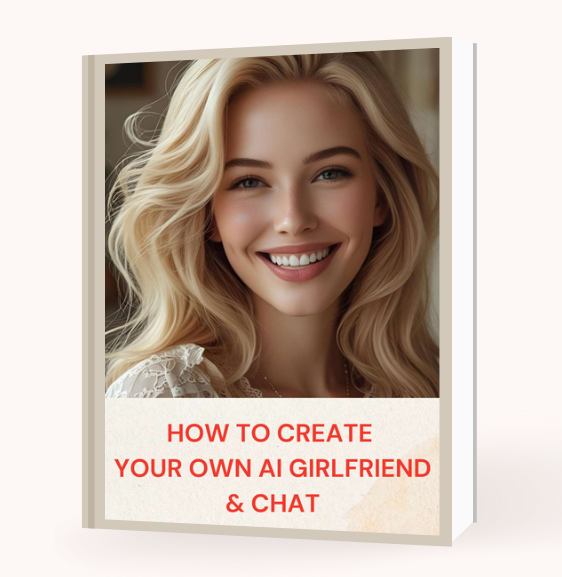
Want to Understand AI Dating Better?
AI dating is growing fast, and most people have no idea where to start. This guide changes that. Inside: honest reviews of the top AI girlfriend apps, step-by-step setup instructions, conversation prompts that actually work, and a real talk on the emotional side of AI companionship.
Explore it confidently, stay balanced, and make it work for your real life.

Ever wondered who’s writing this?
Krystyna has been writing about dating and relationships for over 15 years. She thought she’d seen it all. Then AI companions happened. She didn’t go looking for it. Readers kept asking, apps kept launching, so she did what she always does: downloaded them and started talking. Replika, Candy.ai, FantasyGF, GirlfriendGPT. She went in skeptical.
That’s what she writes about now. How these platforms actually work, what they’re designed to make you feel, and whether any of it is as innocent as it looks.
💬 Got a question about AI dating? Drop a comment — Krystyna replies to every single one.