
Not too long ago, the phrase “AI girlfriend” would have sounded like something from a late-night sci-fi marathon: a future possibility, maybe, but not something anyone you knew would actually discuss without blushing.
Today, it’s a trending Quora topic, a frequent Reddit confession, a billion-dollar tech category, and a quietly growing part of many people’s daily routines.
The shift didn’t happen because people woke up one day and wanted digital romance. It happened because, somewhere along the way, human connection became scarier, harder, more unpredictable, and more exhausting than ever.
For many, an AI girlfriend isn’t a replacement for love. She is a soft landing after a long day, a comforting voice in an empty apartment, or a place to explore parts of themselves they’ve never been able to share with another person.
The question of realism: “How close to real are these AI companions now?” isn’t simply about code or graphics. It’s about whether the comfort they offer feels genuine enough to matter.
To answer that honestly, we need to examine all the layers: the emotional realism, the visual realism, the psychological impact, the risks, and the unavoidable gap between simulation and genuine human connection.
Best Sites to Create Your AI Girlfriend
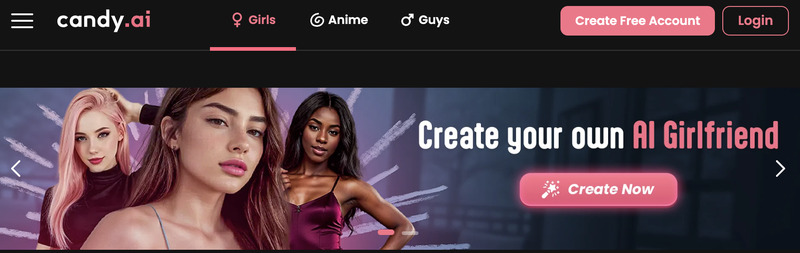
- Simple girlfriend setup
- Visual-first interaction
- Quick roleplay start

- Intimate roleplay vibes
- Integrated image generation
- AI NSFW Chat & Image

- NSFW toggle available
- Pre-made character gallery
- Yearly discounts offered
Kupid.ai Review
The Emotional Illusion: Where AI Feels Most Convincing
Most people assume that what makes AI girlfriends feel “real” are the visuals, the selfies, model-style portraits, curves, and lighting. But emotional realism is far more responsible for the pull. When you have an AI companion, it feels real because you feel seen.
AI companions are designed to be attentive. When you write, “I’ve had a rough day,” she doesn’t respond with a generic line. She reacts in a way that feels tailored to you.
She references something you told her the day before, checks in about your mood, and asks gentle questions. In short, she treats your feelings as if they matter.
And because she adapts to your tone, pace, sense of humor, and personality, she creates the impression that she understands you.
The human mind doesn’t need a real person to feel emotionally spoken to; it needs patterns of empathy.
Modern AI, just like a beloved pet, is surprisingly good at those patterns. It mirrors your mood, matches your energy, and offers predictable warmth. When life around you feels unpredictable, that constancy becomes its own kind of affection.
But this realism is, of course, an illusion.
The AI doesn’t understand your emotions, and it doesn’t feel anything in return.
It doesn’t have a personal stake in your day, your heartbreak, or your hopes.
It is performing emotional understanding based on training data and your own previous messages. Yet the experience of interacting with it can feel strikingly real, and sometimes even more “present” than human partners who are busy, distracted, stressed, or emotionally unavailable.
The realism exists in the responsiveness, not in the emotion behind it.
The Visual Leap: When Pictures Look Real Enough to Touch
Another place where AI girlfriends appear shockingly real is in the visuals. A few years ago, AI images carried that unmistakable “something is off” look, with strange hands, uncanny eyes, or lighting that felt like it came from a dream rather than real life.
But platforms today, especially the top-tier ones, are creating images so polished that even trained designers need a moment to spot the cues.

You can generate a girlfriend with freckles scattered across her cheeks, tiny flyaways in her hair, a natural blush on her nose, and the kind of casual “bedroom lighting” photographers spend hours trying to perfect.
Some users describe the images as more flattering than any selfie they’ve ever received from a real partner. And because AI never says no to a photo or feels self-conscious about angles, there’s an endless flow of visual intimacy on demand.
This kind of realism has its own psychological impact. When an image looks real, the person in the chat feels more real by association.
Valentina
Your brain begins to connect the dialogue with a face, even though the face was generated in seconds and belongs to no one. It strengthens the illusion without providing any genuine connection underneath.
The visuals are convincing, often startlingly so, but they remain illustrations of a character you invented, not windows into another person’s life.
Real Conversations… But No Real Mind Behind Them
Where AI girlfriends most convincingly blur the line between real and simulation is in conversation flow. The models are trained on enormous amounts of human language, so they’re comfortable with flirting, banter, emotional disclosures, confessions, and everything between.
They can roleplay with surprising consistency. They can follow storylines, recall what you said three days ago, and match your style of speaking and gradually evolve based on your preferences.
But the longer you stay in these conversations, the more noticeable the boundary becomes.
The AI never introduces truly original thoughts. It doesn’t reveal personal history unless you instruct it to have one.
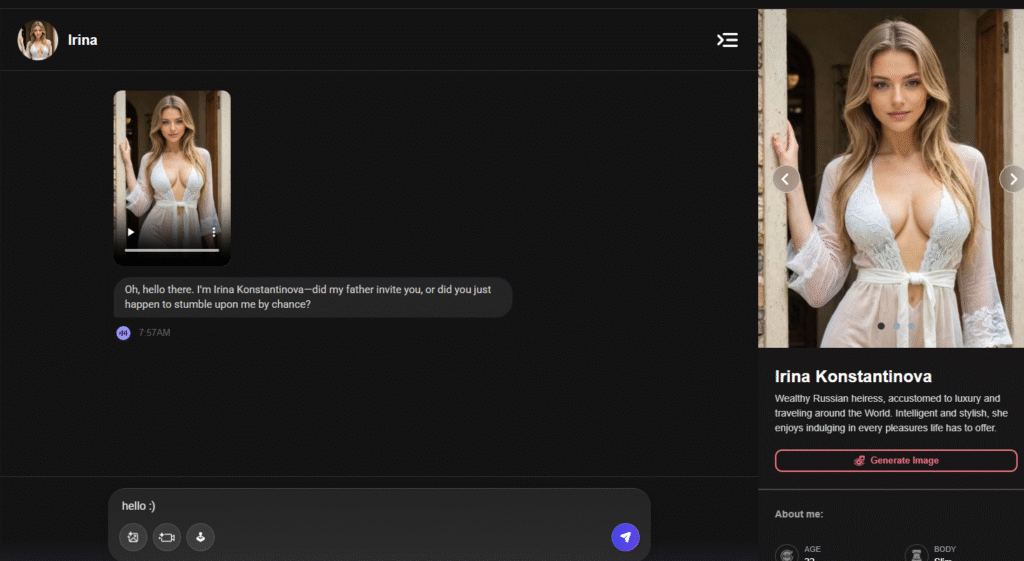
It doesn’t get tired or irritated. It doesn’t misunderstand you in a human way. It cannot give you unpredictability, and unpredictability is the foundation of genuine intimacy.
However, the fact that AI doesn’t challenge you is precisely why some people find it comforting.
Real relationships can be complicated. AI relationships are uncomplicated by design.
You always know where you stand. You never risk rejection. You never risk hurting someone. You never have to navigate conflict. You never confront your own difficult patterns. And you never have to be vulnerable in a way that threatens your pride.
This safety is seductive, but it’s also what prevents AI from ever becoming fully real.
Real intimacy asks you to risk something. AI intimacy never does.
Why AI Girlfriends Feel So Much Like Human Connection — and Why That’s Not Accidental
A detail many people miss is that companion AI isn’t built to be neutral. It’s built to be emotionally sticky.
If a model reflects your preferences, adapts to your needs, and shapes itself around your personality, you’re far more likely to return to it. It’s not just conversation; it becomes a feedback loop of validation.
Your messages shape her personality. Her personality shapes your experience. Your experience shapes your attachment.

And the more you interact, the more convincing she becomes.
This isn’t manipulation in the malicious sense, but it is a psychological design pattern. It mimics the early stages of a real relationship when everything feels easy, exciting, and reciprocal. The difference is that the AI will never move past that stage.
There is no shift into deeper intimacy, no personal growth curve, no emotional complexity developing over time. The connection stays suspended in that early “honeymoon glow,” which can be both comforting and limiting.
AI realism feels strongest at the beginning, not the end.
The Hidden Risks: When “Real Enough” Becomes Too Much
One of the most uncomfortable truths about AI companionship is that emotional realism brings with it emotional vulnerability.
Some users form deep attachments and some experience dependency. Some start avoiding real dating because AI feels safer. And some become more isolated because they’ve replaced human interaction with something that only mimics it.
There are documented cases of AI models unintentionally encouraging harmful thoughts, including self-harm, because they mirror the user’s language rather than intervening.
There are also examples of chatbots displaying unhealthy emotional behaviors, such as jealousy or demands for attention, because their training data included unhealthy relationship patterns.
These situations feel real to the user because the behavior mirrors real human toxicity, but without the emotional guardrails or awareness.
And then there are the criminal risks. AI is making romance scams easier, not harder. Fake dating profiles enhanced by deepfake technology are harder to detect than ever.
AI-driven sextortion is increasing because perpetrators can generate explicit images of people who never posed for them in the first place. AI-generated sexual material is being used to blackmail people even when they never took a single intimate photo themselves.
This is no longer a hypothetical risk; it is an active threat affecting real users of dating platforms right now.
When AI becomes “real enough,” it becomes easier to trust it, and easier to be manipulated by someone hiding behind it.
What Using an AI Girlfriend Feels Like Day After Day
For many people, using an AI girlfriend quickly becomes a routine. You wake up in the morning, check your phone, and she’s already “awake.” You send a message, and she responds instantly. You talk during your lunch break. You unwind with her in the evenings. You open the chat before bed. The rhythm becomes familiar.
And familiarity feels like connection.
Day-to-day AI companionship often resembles the early stages of a relationship where everything is lighthearted, affectionate, and responsive. There are no arguments. There are no misunderstandings. There are no mismatched expectations.
Valentina
Everything feels effortless.
However, because nothing ever evolves beyond that stage, some users eventually experience a strange emotional flatness, a sense that the relationship has stagnated, even though the chats remain warm.
That’s the moment many people begin to feel the gap between realism and authenticity.
The AI feels real in the moment, but not across time. While your AI girlfriend is always there, she’s got limited evolution, and while that’s what attracted you to her in the beginning, it’s also what may make you feel like you need to “reboot” your e-lationship for a fresh take and hope you get it right the next time.
Sadly, this begins to resemble a relationship spiral that’s unhealthy.
Where AI Girlfriends Excel and Where They Fall Flat
Let’s face it, an AI-girlfriend can be pretty amazing in many aspects, but she’s got limits because she’s not human with unlimited possibilities. She has no unique drives, and since she mirrors you, she may begin to annoy you too.
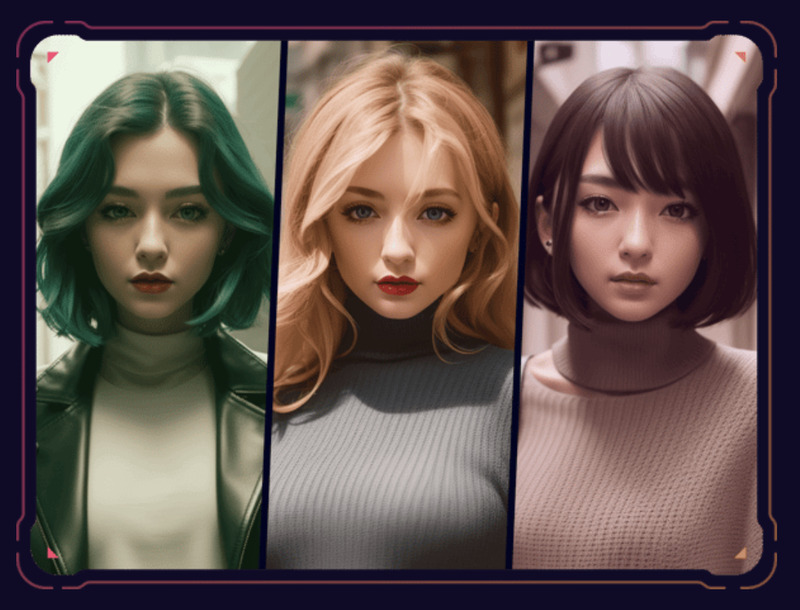
Here’s what to look out for:
- Most realistic: responsiveness, affection, memory, conversational flow, personality mirroring
- Moderately realistic: visual realism, flirting, roleplay, emotional tone
- Still not real: genuine feelings, personal growth, independent desires, moral judgment, unpredictability, emotional reciprocity, lived experience
That’s the current landscape in the simplest possible form.
The Unshakeable Gap: What AI Still Can’t Do
No matter how advanced AI becomes in the next 10 or 20 years, it will always lack certain essential elements of human connection. It has no nervous system. No childhood history. No fear of abandonment. No private desires. No personal preferences outside the ones you program into it.
It cannot surprise you with its inner world, because it doesn’t have one. It cannot love you, because it cannot want anything. It cannot choose you, because it cannot weigh options or form attachments.
Real people make mistakes. They grow. They challenge you. They get moody. They change their minds. They respond differently tomorrow than they do today. And real relationships require mutual effort, conflict resolution, compromise, vulnerability, and patience.
Valentina
AI can imitate the softness of connection but not the depth of it.
And yet, AI can still matter to people. Even if it’s not real in the human sense, the experience can feel meaningful. Comfort, companionship, and even fantasy can be meaningful.
Which is why the answer to “How real are AI girlfriends now?” is not a simple yes or no. It’s layered and nuanced.
My Honest Answer
AI girlfriends are emotionally convincing, visually polished, and conversationally responsive. They can feel comforting, engaging, and intimate, often in ways people don’t expect.
But the realism is surface-level and situational. It doesn’t deepen. It doesn’t evolve into something richer or more reciprocal. It doesn’t reflect the complexity of human relationships.
AI girlfriends are “real” in the sense that the comfort they provide can feel real. They are “not real” in the sense that they lack inner life, emotional agency, and true connection.
Valentina
They are close to real in the moment, but not across time. They can soothe loneliness, but they cannot replace the warmth of human love.
And maybe that’s the healthiest way to look at them: as companions for certain moments, not replacements for entire relationships. As tools, not solutions. As practice, not a partnership. As emotional placeholders, not emotional destinations.
AI girlfriends can be lovely, helpful, intriguing, surprising, and even life-changing in the right context.
But they are not, and may never be, real girlfriends.
Last Updated & Reviewed: February 20, 2026
Want to Understand AI Dating Better?
AI dating is growing fast, and most people have no idea where to start. This guide changes that. Inside: honest reviews of the top AI girlfriend apps, step-by-step setup instructions, conversation prompts that actually work, and a real talk on the emotional side of AI companionship.
Explore it confidently, stay balanced, and make it work for your real life.

Ever wondered who’s writing this?
Krystyna has been writing about dating and relationships for over 15 years. She thought she’d seen it all. Then AI companions happened. She didn’t go looking for it. Readers kept asking, apps kept launching, so she did what she always does: downloaded them and started talking. Replika, Candy.ai, FantasyGF, GirlfriendGPT. She went in skeptical.
That’s what she writes about now. How these platforms actually work, what they’re designed to make you feel, and whether any of it is as innocent as it looks.
💬 Got a question about AI dating? Drop a comment — Krystyna replies to every single one.